Your expertise is built on experience, perspective, and judgement. But now you have to go out and attract clients yourself. And you've found that conversations drift, follow-ups stall, and nothing ever quite moves to a decision.
Your call ends well. There was interest. They seemed to understand. You tell yourself you'll hear from them in just a few days.
Then nothing happens. No refusal. No decision. Just silence, or a vague reply that keeps things open without making actual progress. And you're left wondering what exactly went wrong, and why.
What hurts most is the uncertainty. You can't tell whether the issue is explanation, confidence, timing or something more fundamental. You just know that too many hopeful starts don't get to a decision. And with little or no work coming in, the question becomes harder to ignore. You start to wonder whether going it alone was a mistake.
Nothing accumulates. Each week feels like starting over. There's a creeping anxiety that nothing is building. No pipeline. No predictability. Just a sequence of conversations that felt promising at the time, and then came to nothing.
Instead
This is what changes when we work together. Fewer people say, "That sounds interesting," and more people ask, "What would the next step be?" Conversations move towards decision rather than explanation. The next step becomes clearer, without needing to be forced.
I offer one-to-one sessions. They're not about turning you into a marketer, but about restoring a sense of equilibrium, so you stop over-explaining, hesitating, and performing rather than engaging.
Where to go next
If what you've read feels like your situation, the next section, Is This You?, goes into more detail. You may find it uncomfortably resonant.
If you're wondering what the practical answer looks like, The Wild Thyme Programme sets that out.
And if you've read enough, go straight to Contact. Or tap the WhatsApp button on the screen. It opens with a pre-populated message ready to send.
Is this you?
You're a self-employed professional whose work genuinely helps people, but who doesn't yet have a reliable way of attracting enough of the right clients. You're not new to your field. You may have spent years developing expertise inside organisations, working in roles where the work came through the system and your contribution was understood without needing to be constantly articulated. Now you're working independently. That structure has gone. You have to generate your own work.
You might describe yourself as a consultant, coach, trainer, therapist, practitioner, specialist, or something of that nature. The label doesn't matter. What you have in common is that you sell expertise and professional judgement, not products. Attracting clients was never what you were trained for.
Let's face it. Part of you has long felt that selling was, somehow, a little beneath you. That it was something done by people with targets and commission structures, not by professionals with standards. The kind of activity that required a certain shamelessness you neither had nor wanted. You went into your field to do serious work, not to persuade people, chase leads, or close deals.
That belief is easy to maintain when the pipeline is full. But if the work isn't there, something has to give. So you do the things that feel acceptable. You write. You explain. You put yourself out there carefully, on your own terms, in ways that don't feel like selling. And it still doesn't produce what you need.
And as the weeks pass without anything moving forward, a harder question starts to surface. Whether you're just not cut out for this.
You've tried to explain your work properly. You've written your brochures and rewritten your website. You've chosen your words carefully. On paper, it often looks sound. Yet, in practice, something still isn't connecting. People hesitate. Conversations drift. Nothing quite progresses.
Familiar situations
You still rely heavily on word of mouth. When referrals come, things feel easy. When they slow down, there's no dependable way to restart momentum.
You know you're supposed to market yourself, but most marketing advice feels vague, over-engineered, or repellent. You've tried things. Directories, social media, blogging, perhaps an online course or two. Fragments of progress, but nothing you can trust or repeat. Over time, the accumulation of effort without return starts to wear you down. All you want is for somebody to pay you to do the work you know you're good at.
You have conversations that feel genuinely promising. There is interest. They ask you to send something over. Then the days pass, nothing arrives in your inbox, and your follow-up disappears into silence. For many experienced professionals, this is the first time they have had to think about this deliberately. It was never their responsibility before.
Who it's for
This is for a particular kind of person. The kind of people who take their work seriously and hold themselves to high standards. People looking for practical help getting 'out there' and having clearer, more productive conversations, but without turning themselves into marketers.
People who are willing to take responsibility for attracting clients, even if they dislike the idea of marketing. They act, reflect on what happens, and adjust, rather than look for a single trick that removes the need to engage.
What comes next
If this feels like where you are, the next section addresses what you're probably wondering now. You've known the problem is real for longer than you'd care to admit. The question is whether someone can actually help you do something about it. That's what The Way I Work section is for.
The Way I Work
What's it like to work with Wild Thyme Consulting? Most independent professionals who get in touch already know their work is good. What they want to understand is whether this kind of support will actually change anything. This section addresses that directly: the beliefs that underpin the work, what working together actually feels like, and what makes this different from almost anything else out there.
Expected results
As a result of us working together, you'll find that the conversations you have with potential clients begin to move more readily towards decision rather than explanation. The people you speak to will become clearer about what you do and why it matters without needing to be persuaded.
Client attraction will become more deliberate and repeatable. Referrals and word of mouth will still matter. But they'll no longer be the only thing standing between you and the next client.
Not every conversation will lead somewhere. But fewer will drift for reasons you can't identify, or stall in ways that feel vague or discouraging. You'll find it easier to talk about what you do when it actually matters.
Guiding beliefs
It matters to me that the people I work with know where I stand. Not just what I do, but what I believe to be true. These are some of those convictions:
Good work deserves to be recognised, not dressed up. The problem is rarely quality. It is clarity.
Marketing that requires you to perform or inflate yourself is unsustainable. If a way of attracting clients cannot be maintained without strain, it will eventually be abandoned.
Responsibility matters on both sides. It works when you are willing to engage, try things, and pay attention to what actually happens.
My approach
Each session focuses on what you're actually doing to attract clients right now: where conversations begin, where they stall, and what tends to happen next.
I stay close to real situations rather than abstractions, and pay attention to where effort is being misdirected. That effort often shows up as activity that creates motion without progress.
You try things, we look at what happened, we refine. It's iterative rather than prescriptive. Confidence grows from experience rather than reassurance.
What makes this different
This is not about importing tactics designed for someone else's business. The emphasis is on judgement, proportion, and fit rather than formula.
Having seen the same patterns repeat across coaches, advisors, consultants, and specialists, I can usually recognise when advice is technically correct but practically useless. And when something sounds impressive but does not survive contact with real people.
What comes next
Now that you have a sense of the beliefs behind this work and what working together actually involves, the next section sets out the one way we can begin. That's The Wild Thyme Programme.
The Wild Thyme Programme
You are good at what you do. You have real expertise, genuine judgement, and a track record that justifies confidence. And yet, when an opportunity appears, something goes wrong. The conversation drifts. The follow-up disappears into silence. The decision never comes.
The Wild Thyme Programme is designed precisely for you. Its purpose is to give you the understanding of what's actually happening in your conversations and why, the language to explain what you do with the clarity and essential detail it deserves, and the capability to bring a promising conversation to a decision.
Most professionals describe their work from their own side of the relationship. You talk about what you do, how you do it, and what you offer. But the person you're trying to reach is not thinking in those terms. They're thinking about their own situation. The difficulty they're in right now. What it feels like to be where they are. What they've already tried. What's at stake if nothing changes.
When you can describe that situation accurately, in language that reflects how your client actually experiences it rather than how you categorise it professionally, they stop evaluating whether your service applies to them and start feeling that you already understand them. That is a different kind of attention, and it changes what happens next.
It begins with a clear understanding of who your work is actually for and what their world looks like before they find you. From there, each step builds directly on what the previous one uncovered, bringing you closer to conversations that move, follow-ups that produce something, and decisions that come with speed and clarity.
Nothing is assumed and nothing is skipped. The sequence matters because the problem you think you have is rarely the one that is actually costing you clients.
By the time the work is complete, you will be able to explain what you do with enough clarity that it reaches the people you're speaking to, rather than passing them by. You will understand what is actually happening in your conversations and what moves someone toward a decision. You'll have a way of engaging with potential clients that feels natural, because it is grounded in genuine understanding rather than borrowed technique. And you'll have something more valuable than a set of tools: a clarity about your own work that changes how you talk about it in every context.
That matters, because much of what passes for "sales training" was never designed for someone like you. It was built for high-volume, script-driven environments where the product is interchangeable, the prospect is a target, and success is measured by how many calls were made rather than how many relationships were worth having. The techniques that emerge from those environments are not wrong because they are sales techniques, but wrong because they belong to a different world entirely. A world where the person on the other end of the conversation is an obstacle to be overcome rather than someone with a legitimate decision to make.
Your situation is different. You are selling expertise and judgement, not a product. The person you are trying to reach is not a target. They are someone who may genuinely need what you do. The work is about finding that person, helping them see that clearly, and creating the conditions in which a real decision can be made.
It's a different discipline. And it requires a different kind of help.
The work is conducted one to one, in a way that lets it be understood and genuinely absorbed. There is no performance involved, no pressure applied, and no moment where you are asked to be anything other than the professional you already are.
This is not an open-ended engagement.
One programme. One fixed price.
£650
Next Step
Now that you know what the work involves and what it is designed to produce, the next section addresses the question you are probably asking yourself right now: has it actually worked for people in a situation like mine?
Not Quite Case Studies
You want evidence that this works. And like most people, your first instinct is to look for it in the case studies. That's reasonable. But ask yourself what a case study can actually tell you, and what it can never tell you.
It can tell you that someone else was satisfied. What it can't tell you is how complete that picture is, how representative that experience was, or whether the circumstances bear much resemblance to yours.
It can tell you that someone worked with a well-known company, or show you the logos of clients who said yes. But you are not that company, and you are not that person. Their experience, however impressive it sounds, says nothing about whether this work is right for you, at this point, in your circumstances.
For what it's worth, I've never been convinced by case studies as a persuasion tool. To me, the only thing that tells you whether someone understands your situation well enough to help is a conversation with them.
Here's what I think I know about you. You're not struggling because your work is weak. You're struggling because the people who would benefit most from it can't yet see that. And you've started to wonder whether the problem is you. Your confidence. Your manner. Your ability to explain yourself when the moment arrives.
It's probably not. But that doubt has started to cost you, in hesitation, in over-explanation, in exchanges where you give too much away trying to prove something that shouldn't need proving.
The conversation itself is the evidence.
If you've read this far and recognised yourself, you know more than any case study would have told you. What's left is a simpler question: whether the person writing this is someone you could trust to help you think more clearly about your own situation. The next section is about that.
About Me - and "Wild Thyme"

By the time you reach this point, you probably already know whether working together makes sense to you. But what you may be deciding now is whether I'm someone you trust to help you work out why your sales conversations aren't converting, and what to do differently.
I work with experienced professionals who are good at what they do, but find client attraction strangely uncomfortable. Selling was never meant to be the job. Over the years, I've seen the same pattern repeat across professionals who trade in judgement rather than products.
My name is David Feller. My background is not in tactics, funnels, or “growth hacks”. It comes from years of working alongside people whose work genuinely helps others, and watching what happens when that work has to be explained, justified, or compressed into something it's not. I'm interested in where conversations stall, where confidence drains away, and where capable people start performing instead of engaging.
What I bring to the work is perspective, not a formula. I've been around long enough to recognise when advice is technically correct but practically useless. When something sounds impressive but does not survive contact with real people. My role is to notice those moments, name them plainly, and help you move past them without making you feel foolish for missing them.
Much of the work is about restoring proportion. Helping people stop apologising for their fees. Stop chasing the next bright tactic. Stop trying to sound like something they are not. And start having fewer, better conversations with people who are actually deciding whether to proceed.
One practitioner described a shift they hadn’t expected: “Someone contacted me and said they’d read the entire site. They told me, ‘Normally I skim a few bullet points and decide. But I kept reading.’ When we spoke, it felt like half the conversation had already happened.”
Another client noticed a different change: “Before, every discussion seemed to slide towards price. Now the conversations that continue are different. People say, ‘I’m not sure if I should do this at all. But if I do, it would only be with you.’ That surprised me.”
A newly established practitioner put it this way: “People don’t ring to ask whether they should work with me anymore. They ring to ask when. They already know what I’m about, and they use the same language I do.”
Those moments are not accidental. They happen when persuasion gives way to recognition, when language is organised around the client's problem rather than the practitioner's label. It's about helping you respond to opportunities in a way that reflects the quality of what you already do.
Wild Thyme is taken from Shakespeare's A Midsummer Night's Dream, a play full of confusion and crossed signals, of people losing their bearings, of feelings that never quite find their right expression. Oberon describes a grassy bank "where the wild thyme blows"; a still, sheltered place in the middle of all that disorder. It is where he chooses to act. Where he applies the potion. Where the transformation begins. Things fall back into place. The name is not accidental.
People have said to me that they often wish they had found this work earlier. Usually after realising how much time and money they spent chasing things that looked like progress but changed very little. That regret matters, but it is not the point. The point is that once things click, the work becomes simpler, calmer, and easier to sustain.
If this website feels less brash than most marketing sites, that's deliberate. I am not trying to appeal to everyone. I am interested in working with people who recognise their own situation here, and who want to move forward without pretending, performing, or inflating themselves.
If you've read this far and feel a sense of relief rather than excitement, we should probably be talking. To find out whether the timing is right and whether this is something we should be doing right now. If this feels like the right next step, the Contact section is where we can really begin.
Contact
If you’ve reached this point, you probably already have a sense of whether the work itself makes sense to you. The question now is more likely to be about timing, fit, and whether it's worth being in touch.
Those are exactly the kinds of things that become clearer once we've spoken. Getting in touch does not commit you to anything.
The purpose of first contact is to understand your situation a little better and decide, together, whether this is the right work to do at this point. There is no pressure, no pitch, and no obligation to proceed.
People reach out in different ways, depending on where they are. Some prefer a short message to test the water. Others want to set things out more carefully in writing. There is no right way to begin, and no expectation that you already know what you want to do.
However you make contact, the starting point is the same. We talk through what’s happening in your practice and what's actually going on underneath it. I won’t be reaching for answers the moment you start talking. I’ll ask questions that follow what you’ve just said, rather than jumping ahead. And I’ll check back to make sure I've understood accurately. We’ll stay with it long enough for a clearer picture to form, rather than settling too quickly on an explanation. If it looks like this work can help, we talk about what that would involve. If it doesn't, we say so plainly.
It's exploratory and at no cost. You won’t be put on the spot, sold to, or treated as though you should already have answers you’re still working towards.
You can contact me in whichever way feels easiest. A brief WhatsApp message is fine. A more considered note via the form below is equally fine. Email or phone works too.
If you’ve been hesitating because you feel too small, underprepared, or unsure how to explain things, that’s normal. Most people I've worked with felt exactly that way before we first spoke. You don’t need to arrive confident or clear. That’s part of what this work is for.
If this feels like the right next step, I’ll be glad to hear from you. And if it doesn’t, you'll leave here with more clarity than when you arrived.
Whatever you decide, thanks for reading.
David F.
Get In Touch
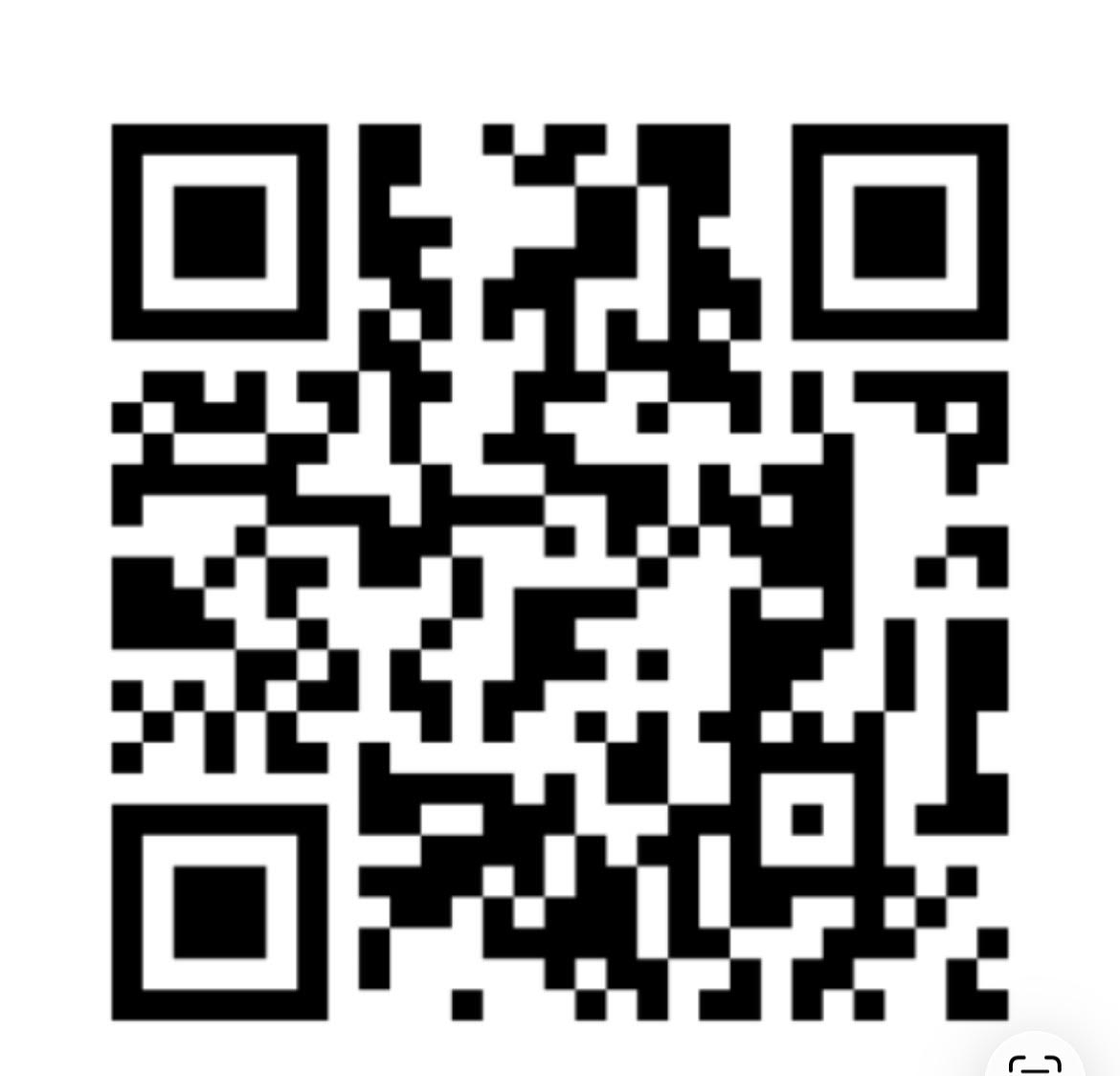
Oops, you're not quite in the right place. This page makes considerably more sense on a mobile, and that's a deliberate choice rather than an oversight. It runs to several thousand words, and that kind of reading works better when you're holding it in your hand than when you're sitting at a desk. Scan the code opposite and we'll continue there.
Wild Thyme Consulting works one to one with independent professionals who are good at what they do, but find that early conversations with prospective clients don't reach a decision.
In most cases, you'll have arrived here after a conversation with me, my business card in hand, the QR code scanned. That's precisely how this page was intended to be read, on your phone, in a quiet moment, after we've spoken.
The mobile experience mirrors the kind of one-to-one exchange that Wild Thyme Consulting is built around, and that's not something a desktop or laptop replicates quite as naturally.
What you'll find there is not a typical marketing or sales resource. It isn't about learning to become a better marketer or a more confident salesperson. It's about something different entirely. The page is designed to do that work for you, so that by the time you speak to a prospective client, the question on their mind is not whether to proceed, but when.
The page was designed with a specific intention. Most pages in this space try to persuade. This one tries to explain. By the time you reach the end of it, the conversation we need to have will largely have already happened.
If you'd prefer to make contact directly, leave your details below and I'll be in touch. There's no obligation and no pitch, just a straightforward conversation about whether this is the right work for you at this point.
Get in touch